A well-built chest is not only a symbol of strength but also a symbol of dedication, confidence, and even balance. Be it a person who enjoys the sound of grunting metal in the gym or would rather keep it simple at home, chest training is crucial to the development of the upper body and enhancing effective strength. The best part? No machines or costly memberships are required; all that is necessary is consistency, knowledge, and readiness to stretch your limits. In this, we are going to deconstruct ten Chest Workouts that will help you build up your chest, rather from push-ups to pure power. Let’s grind.
1. The Secret of Strength: What Your Chest Muscles Are.
You must know what you are training before you begin putting on the heavy or chasing after personal bests. It is not a single huge muscle slab upon the chest, but it is composed of two major parts, the pectoralis major and the pectoralis minor. The pectoralis major is the thick fan-shaped muscle that forms the majority of your chest with two heads, namely, the clavicular head (chest upper) and the sternum head (chest middle and lower). Pectoralis minor is subcutaneous and has a supportive role in assisting in moving the shoulder blades as well as stabilizing your upper body during pressing. Knowing the function of these muscles makes you train better. As an illustration, upper chest muscles are focused on by incline movement exercises such as incline dumbbell presses, whereas the lower part is focused on by decline exercises such as decline presses. Flat presses strike on the overall chest evenly. The most common mistake of beginners is to concentrate on the flat bench press only, but to be able to develop a complete full chest in sculpture, you should work it in a variety of angles. Another important point to note is that your chest muscles will help you with nearly all pushing moves, such as opening a door or doing dips at the gym. A powerful chest will increase functional strength and posture, which helps limit rounding and pressure in your shoulders and back, respectively. You are in control of the goal of your muscle; thus, each rep will be more meaningful and productive.
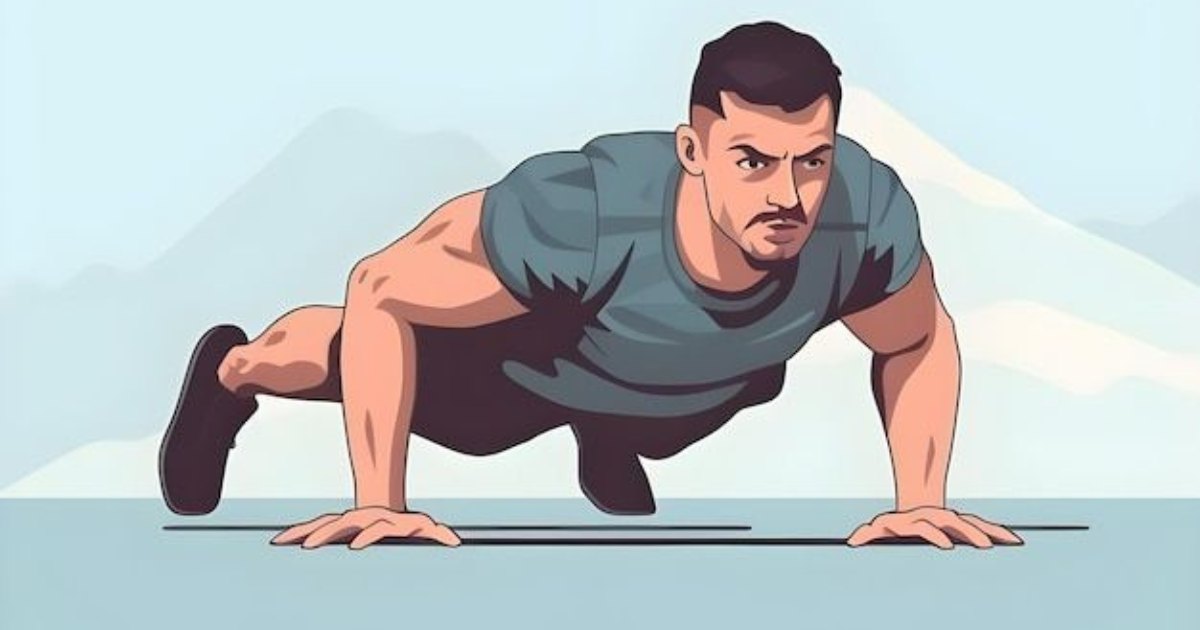
2. The Classic Push-Up: Chest Strength in 30 Seconds.
The push-up can be referred to as a part of chest workouts; it is the place where most people will start their adventure, and, quite frankly, there is no point when it will cease to be effective. Push-up is an all-body power move that not only builds your chest, but also triceps, shoulders, and core. Begin with the correct position: you should position your hands slightly further than your shoulders, straight between the head and the heels, and use your core. Get down until your chest is almost touching the floor, and then thrust upwards. Simple? Sure. Easy? No, by no means – not when it is done correctly. The thing with push-ups is that they are versatile. Novices will be able to begin with knee push-ups or incline push-ups (hands on a surface that is higher than the table, such as a bench). When you are strong enough, attempt decline push-ups, clap push-ups, or diamond push-ups in an attempt to work different areas of the chest. To burn, organize your push-ups into circuits or pyramids, e.g., 10 reps, rest, 9, 8, 7, and so on till you get to one. It’s 55 push-ups altogether, and each one of them will be felt in your chest. No gym, no excuses. Push-ups teach the control of the body, enhance stamina, and develop crude strength. It is your backbone, your fall guy, and your whole life training partner.
3. The Bench Press: King of Chest Day.
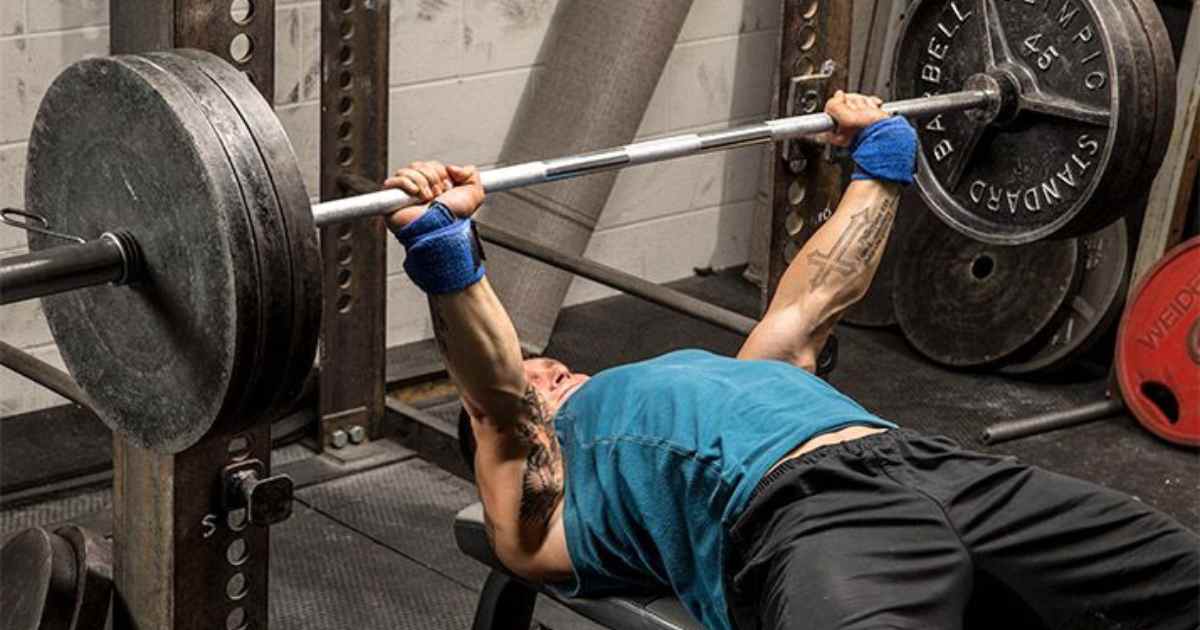
Visit any gym and you will find the bench press station that is literally a throne. And in a way, it is.
The bench press has taken its title of being the best upper-body workout, developing crude strength and bulk in your chest, shoulders, and triceps. Technique is all when doing the bench press. The position is lying flat with the feet sole and holding the bar about a bit wider than shoulder-width, and a slight arch in the lower back. Bring the bar down to the mid-chest and, with one explosive breath, bring it up. Bouncing the bar of your chest is not strength; it is momentum. Variations are required to attack your chest completely. Incline bench press focuses on the upper pecs, which give your chest that raised and more appealing appearance. The bench press movements are changed to lower chest, and the dumbbell presses improve balance and unilateral power. Even to keep your muscles adapting, you can switch between barbells and dumbbells. The bench press is more than weight lifting; rather, it is about control, consistency, and progressive overload. Gradually increase the weights, keep a record of your sets and reps, and ensure that you maintain your form. Dominate the bench, you will dominate one of the most recognizable movements in the entire fitness world. You can also get some more information about chest workouts on the Harvard Health official website.
4. Home Heroes: Equipment-Free Chest Workouts.
No gym? No problem. It is entirely possible to build a strong chest at home–and the results may be spectacular, provided one is disciplined. All you require is a body, and you only need to know how to use it. Variations of push-ups will be the bread and butter in this case. Wide push-ups affect the outer pecs, diamond push-ups affect the inner chest and triceps, and the decline push-ups (with feet raised) affect the upper chest. Archer push-ups with unilateral control, or explosive push-ups to gain power, can also be tried. Jumping over tall obstacles is best with a book and the weight vests on your backpack – you can make weight with books! Intense exercises combine these exercises into circuits. For example: 15 standard push-ups, 12 wide push-ups, 10 diamond push-ups, 8 decline push-ups, 3-4 rounds, with a 45-60 second break between rounds. This kind of training not only builds muscle, but it also builds mental toughness. The pain you get at home is not any different than at the gym anymore; it is the hard work.
5. Dumbbell Exercises: Strength Training at Your Free Will.
Dumbbells are truly better in that they allow free movement and use stabilizer muscles, which are usually ignored by barbells. Dumbbells are recommended in case you have the desire to develop a complete, defined chest. Begin with the flat dumbbell bench press; it is like the barbell version except that it offers a greater stretch at the bottom of the movement. Then, proceed to incline dumbbell press to develop the upper chest. Concentrate on the controlled reps, reduce the dumbbells gradually to experience the stretch, then push up with force. Another golden egg in the chest isolation is the dumbbell flye. Lying on a bench with your arms raised over your chest and then hugging them out, as wide as possible, until you experience deep discomfort, and then draw them back together, as if hugging a huge tree. This movement is a chest expansion and definition movement. At home, the trainers do not have heavy dumbbells; replacing them with water bottles, sandbags, or resistance bands is also possible. The weight itself does not matter; it is how well you can control and contract your muscles. Time-Saving Tip: Do a superset of pair presses and flyes (one immediately following another) to achieve a crazy pump that will make your chest feel like it is about to pop.
6. Cable and Machine Work: Chest Polishing.
When you have built up a platform of strength, it is now time to shape. Cable and machine exercises are ideal for shaping, defining, and final touches on your chest. Crossover. This is among the most desired movements in the inner chest. Begin with the cables high, then bring your hands down and into one another in front of you, and squeeze your chest at the end of every single rep. Would you like to change it? Flex the cables downwards and draw upwards- that touches the breastbone well. The pec deck fly and chest press are machines where one has controlled and consistent tension in the movement, which induces muscle hypertrophy (growth). No balance concerns yourself, as with free weights, it is all pure focus on contraction. These can be used as your final blows after weight-bearing pressing. They do not merely add bulk; they add form and shape, and that same line running along the middle of your chest. Imager:y Change the image of this phase to carving the muscle you have developed into art.
7. Progressive Overload: The Answer to Never-Ending Growth.
The muscles are only able to enlarge in case you push them beyond what they are used to. That is where progressive overload enters the picture, the gradual stress increment on the body brought on by the training. This does not necessarily imply that they should be heavier each time (although one of the components of it). You can make it tougher with the addition of reps, the decrease in rest, or your tempo. An example is when it takes 3 seconds to lower a weight compared to 1, which creates a significant difference in the tension of the muscles. It is important to keep track of progress. Record a training journal. Every week, make notes on your sets, reps,s, and weights. Assuming that you put in 100 lbs with 8 reps this week, then you will strive to achieve 9 or 105 lbs the next week. In case of home exercises, one can overload by adding more volume (more sets), more difficult variations (substituting knee push-ups with archer push-ups), or resistance bands. Overload will always ensure that your chest muscles increase in size steadily and will never stall out at any point in your training path, since comfort zones never develop strength.
8. The Importance of Form and Mind-Muscle Connection
Building a strong chest requires more than just moving a weight from point A to point B; it requires cultivating and controlling each rep to perfection. The mind-muscle connection is about concentrating on your chest doing the work and ignoring your shoulders and arms. In the case of the bench press and chest flye, imagine your chest squeezing the weight in a powerful contraction. Control your reps and pay attention to the stretch and the contraction. That control will activate the muscle more and will prevent injuries. Poor form kills your progress. Overarching your back, flaring your elbows, and using excess momentum to perform the exercise will cause effort to be wasted and lead to shoulder strain. You must begin with a weight that is manageable and will allow you to perform the exercise with perfect form. Ego lifting is of no benefit to anyone. A cue that can be used in push-ups or any of the pressing movements is to think of “bringing your biceps together” as you perform the movement. This changes the goal from a horizontal push to a more directed movement and helps focus the tension on your chest.
9. Recovery and Nutrition: Where Growth Actually Happens
While many people tend to ignore this fact, muscle growth happens during recovery and not when lifting. Exercise breaks your muscles down, and it’s through rest, nutrition, and sleep that we rebuild them stronger. During recovery, fuel your body with protein sources like chicken, fish, eggs, lentils, or protein shakes. Balance out your protein with complex carbohydrates (oats, rice, sweet potatoes), healthy fats (avocados, nuts), and other sources of carbohydrates to energize and aid recovery. Be sure to get enough sleep. Aim for 7-8 hours per night. The deeper you sleep, the more growth hormone your body releases to facilitate muscle repair. Take rest days. If you train your chest every day, you won’t make it grow faster. You’ll just exhaust yourself. 1-2 focused chest sessions per week with 48 hours of recovery are enough. Consider recovery as part of your workout plan and not an afterthought. It is the silent partner of your hard work and transforms effort into visible improvements.
10. Unity and Attitude: The Real Force of Progress.
Consistency is the key to all knowledge, exercises, and strategies of the world at the end of the day. It takes time to develop a strong and defined chest, weeks of work change to months of growth, and those months turn into years of change. Sometimes you will be unmotivated, the bench will be heavier, or the push-ups will seem endless. The true success, however, is turning up. The simplest of activities, such as a quick workout, a few sets at home, or even a routine, can keep the momentum going. It is not necessary to pursue perfection but progress. Keep a diary of your progress, win over minor battles, and be patient. It is effort, and not overnight effort, that makes muscles respond. Any repetition you do is an investment in yourself. Not only is your chest getting stronger, but your discipline, focus, and confidence are becoming stronger as well. And that is what From Push-Ups to Power actually refers to, not a literal definition of physical power, but a mentality to keep pushing when the weight is on.

Final Thoughts
Doing chest exercises is not just a physical challenge, but a mind-building exercise as well. You may be grinding in a gym or performing push-ups in your living room, but always keep in mind that growth is a result of continuous effort and intelligent work. Know your muscles, control your shape, power your recovery, and most of all, remain regular. Power is not simply defined by the amount you can lift, but it is also defined by the length of time you can commit. And continue to push, to develop, and make your chest and all your strength next level.
Want to take your body to the Next Level? Check out this amazing Blog, Fitness and Nutrition: The Perfect Duo for a Healthier You